Moss, Algae, and Your Winnipeg Roof: Causes and Cures
@residentialroofing-t-y-e-v-3-3-5
November 25, 2026 · 17 min read
If you live in Winnipeg long enough, you learn to respect two things: the wind that can push a grocery cart uphill, and the winter that turns even sturdy roofs into science experiments. Hidden in that yearly shuffle from humid July to minus 30 in January sits a quiet roof wrecker: a soft, green-black ecosystem of moss, algae, and sometimes lichens. Whether you notice black streaks sliding down the shingles on your St. James bungalow or fuzzy green clumps settling into the North Kildonan shade, the problem is the same. Biology loves your roof. The good news is you can fight back without turning your shingles into confetti.
This is a guide written from jobsite mud and rooftop grit, tuned to local climate and local habits. If you have questions about winnipeg roofing, or your roof just feels slippery under foot, keep reading.
Winnipeg’s roof petri dish
We live in a city of hard weather swings. Summers crank the humidity, thunderstorms shed organic debris, and autumn adds a mat of poplar fluff and maple helicopters. Winter then freezes all of it into a damp roof lasagna. Come spring thaw, moisture lingers on cool, shaded slopes. Sunward faces dry out quickly, but north and east exposures stay wet longer. That is prime time for organisms that only need shade, moisture, and a little grit to chew on.
Winnipeg averages roughly 500 to 550 millimetres of precipitation in a year, and a lot of that falls in summer. Add several months of freeze followed by shoulder seasons with frequent above and below zero flips. Those swings create tiny separations at shingle edges and granule loss on older roofs. That roughened surface holds water. Moss and algae see a welcome mat.
Tree cover matters. Neighborhoods with mature elms and spruce, especially where branches overhang the eaves, grow more moss. North End alleys that never see full sun also breed slippery roofs. Newer subdivisions on the prairie edge grow less moss for a few years, until the landscaping matures. If your house shares a roofline with a taller neighbor that blocks afternoon sun, expect more growth on the shaded half of your slope.
Know your green: moss, algae, and the other tagalongs
Not all green stains behave the same. If you want the cure to stick, know the patient.
Moss is a tiny plant with stems and leaf-like structures. It forms soft clumps, especially along shingle tabs and ridge caps. It loves continuous shade and cool moisture. Moss is the worst actor for asphalt shingles because it wedges itself under tabs and holds water like a sponge. In freeze seasons, that moisture expands, prying shingles and amplifying damage. Well established moss can shorten a roof’s life by several years on its own.
Algae, often gloeocapsa magma, is what causes the black or dark green streaks. It is not fuzzy. It looks like dirty runoff, but it does not wash away in the next thunderstorm. Algae eats on the limestone filler used in many asphalt shingles, so it can persist even on relatively new roofs. It is uglier than it is damaging, but persistent algae does trap moisture and light, which invites moss and lichen.
Lichen is a partnership of fungus and algae, crusty and often pale green or gray. It glues itself to the shingle surface and can be tough to remove without lifting granules. Lichen arrives after algae has set the stage and can signal a longer timeline of neglect.
If your roof is metal, you will rarely see moss actually root into the surface, but you may get algae films at seams and under snow guards. Cedar shakes grow moss faster than almost any other material once the surface weathers, especially under trees. Concrete tiles vary widely, but their texture can host moss in shaded valleys.
Why growth happens here more than you think
Winnipeg roofs do not just get wet. They cycle through condensation on cool nights, morning dew, and drying midday winds, then repeat. Any place with poor sun exposure or blocked airflow sees longer dew dwell time. Add a bit of organic debris, like poplar fluff mixed with grit, and you have a cozy mat for spores. Gutters that overflow stain the lower courses, and downspout discharge across a lower roof keeps those shingles damp. Even the color of the roof plays a role. Dark shingles heat up more in direct sun, but shaded dark shingles can stay cool longer, which means longer wetness in shoulder seasons.
Attic ventilation contributes too. If your attic breathes poorly, warm interior air can meet a cold roof deck and create condensation from the underside. That extra moisture migrates through felt and out through nail holes, slightly dampening the shingle line, particularly near ridge and valleys. You might never see the attic drip, but the roof surface reads the moisture signature all the same.
The real costs of leaving it alone
Some homeowners wave off the stains as cosmetic. That is true for a while, especially with simple algae streaks. But left to fester, growth compounds. Moss will creep under tabs, lift the lower edges, and slow roof shedding during spring melts. On a 6 to 12 pitch with a shaded north face, I have seen ice linger three to four days longer where moss was thick. That slack water finds its way sideways into capillary gaps, then back up under the next course.
Every spring, I meet at least one owner with an 11 year old roof that looks 18. The pattern is familiar. Black streaks by year four, green flecks by year six, a green ridgecap and patchy lifting by year nine. Shingles that should have made 20 years start to crack and shed granules like a dog in July. If replacement costs run 8 to 12 thousand for an average bungalow, a little cleaning and prevention looks cheap.
There is also safety. Moss turns a roof into a skating rink. The most dangerous step on the job is the first step on a slick shingle. If you ever doubt it, mist a mossy area with a garden sprayer, then try to stand up. Better yet, do not.
Diagnosing what you have from the sidewalk
You should not need to climb a ladder to get a first read. Algae streaks look like smoke trails running down from the ridge or vents. They darken evenly, not in clumps. Moss begins as bright green flecks that pop against gray shingles, usually in shadier corners, behind chimneys, and along valleys where debris collects. Lichen reads as crusty, coin sized patches, often pale or ash gray with a greenish ring.
Check which slopes show growth. If only the north and east faces are hit, shade is your culprit. If all faces carry black streaks, your shingles likely have a higher limestone content and your neighborhood microclimate keeps humidity up. Look at the tree cover within two house lengths. Overhanging conifers drip tannins and hold shade even in winter. Then watch your gutters during a rain. If waterfalls pour over the edges, streaks below the eaves are almost guaranteed.
Cleaning without destroying your roof
Here is where people get into trouble. Pressure washing a shingle roof is like using a belt sander on your hardwood floor to remove a coffee stain. Sure, the stain is gone. So is the finish. Shingle granules are not decorative glitter. They are UV armor and impact resistance. Blast them off and you accelerate aging.
The right approach is gentle chemistry, time, and low pressure rinse if needed. It is also about safety and runoff control. Winnipeg yards are proud of their tomatoes. Bleach on the perennials will not win you neighbor of the year.
A practical, homeowner friendly method looks like this:
- Choose the right day. Aim for a cool, overcast afternoon with light wind. Heat dries your mix too fast and sun can flash-bleach in splotches.
- Protect people, pets, and plants. Cover delicate shrubs with a tarp, wet down the beds, and divert downspouts if practical. Close windows. Wear eye protection, gloves, and shoes with real tread. If the pitch is anything steeper than 6 to 12, use a roof harness or stay on the ladder and work with an applicator pole.
- Mix a roof-safe cleaner. For asphalt shingles, use a sodium hypochlorite based cleaner designed for roofs, diluted per label. If you are mixing from household bleach at 6 percent, a typical starting point is one part bleach to three parts water, plus a small amount of surfactant so it clings. Never blend with ammonia or acid products.
- Apply, then wait. Mist the affected areas from the bottom up to prevent streaking. Let it sit 15 to 30 minutes. You will see algae streaks fade quickly, while moss darkens. Do not let the solution dry out completely. Lightly re-mist if needed.
- Rinse and repeat conservatively. Use a low pressure garden hose to rinse. Avoid lifting tabs. Heavy moss may require a second application. Resist the urge to scrub aggressively. A soft brush can loosen thick clumps after the chemical kill, but plan to let dead moss weather off over a few weeks.
That single list covers the safe sequence. Everything else is judgment. If your roof is older and brittle, minimize foot traffic and abandon any idea of scraping. If you see shingle edges crumbling in your hand, chemical cleaning might do more harm than good, and a replacement plan might be smarter.
On cedar shakes, skip bleach. Use a cleaner rated for wood roofs, typically oxygen based or quaternary ammonium, and keep water pressure gentle. On metal, a mild detergent or quaternary ammonium mix often does the trick, followed by a careful rinse that does not flood seams.
What about store shelf “wet it and forget it” products
Some slow acting cleaners use quaternary ammonium compounds that continue to inhibit growth over weeks. They are gentler on plants and shingles but slower to show results. I use them on delicate roofs or in shoulder seasons when I cannot flood rinse. Expect algae stains to fade over one to three months, with moss dying and loosening over a similar period. If you want instant before and after photos, sodium hypochlorite wins. If you want the least plant stress and less odor, the slower chemistry might fit you better.
The zinc and copper angle
Moss and algae dislike trace metals like zinc and copper. You can leverage that by installing a strip of zinc or copper near the ridge. Rainwater carries ions down the roof, discouraging growth. In Winnipeg, this works well on smooth architectural shingles with moderate shade. It is not a silver bullet in deep shade under a dense spruce. Expect better performance on a 4 to 8 foot run below the ridge, tapering off farther down. If you install the strip under the ridge cap with 1 to 2 inches exposed, you keep the look clean. Copper is more effective than zinc but costs more. In hail country, choose a thickness that will not crumple at the first June storm.
Prevention that actually sticks
Regular maintenance beats triage. Homeowners often think of roofs only when a leak shows up in the kitchen light fixture. The roof thinks of you every windy day when it collects grit, seeds, and soot. A simple routine helps.
- Trim back overhanging branches to open sky and airflow, ideally leaving a 6 to 10 foot gap where possible. Clean gutters in spring and fall so water sheds cleanly. If ladder work is not for you, hire it out. It is cheaper than fascia replacement.
- Keep roof surfaces free of organic mats. After leaf fall, use a roof rake or a soft brush on a pole to pull debris off valleys and behind chimneys. Do not grind it in. Think gentle sweeping, not floor buffing.
- Improve attic ventilation and insulation balance. Target clear intake at the eaves and unobstructed exhaust at the ridge. If you have only gable vents, consider adding continuous soffit vents and a ridge vent. Better drying from below reduces surface moisture and doubles as ice dam insurance.
- Mind your downspouts and overflow points. If upper roofs dump onto lower roofs, add a splash block or short diverter to spread the flow. Concentrated rinse zones stay persistently wet.
- Consider algae resistant shingles when you re-roof. Many architectural shingles carry copper infused granules that slow algae growth for several years. In a shady Winnipeg lot, that buys you time and cleaner curb appeal.
Those five bullets are the second and last list for a reason. They boil down years of tripping over the same mistakes. The rest of this section unpacks the nuance.
Tree trimming in Winnipeg can be a dance with bylaws and Dutch elm disease control. Have a certified arborist prune mature elms in dormancy. They will shape to allow sun fingers through without butchering the canopy. On the ground, redirect sprinkler heads away from the roofline. You would be shocked how many algae streaks trace back to a backyard sprinkler kissing the eaves twice a week.
Attic work pays off even if moss is not your main worry. In older homes with a mixture of batts and blown-in insulation, I often find soffit chutes blocked by insulation or painted-over vents. Clearing a few linear metres can turn a stale attic into a breathing one. Target at least a 1 to 300 ventilation ratio of net free area of vents to attic floor area, adjusting for baffles and screens. The math sounds fussy but the takeaway is simple. Give humid air a way out and dry air a way in.
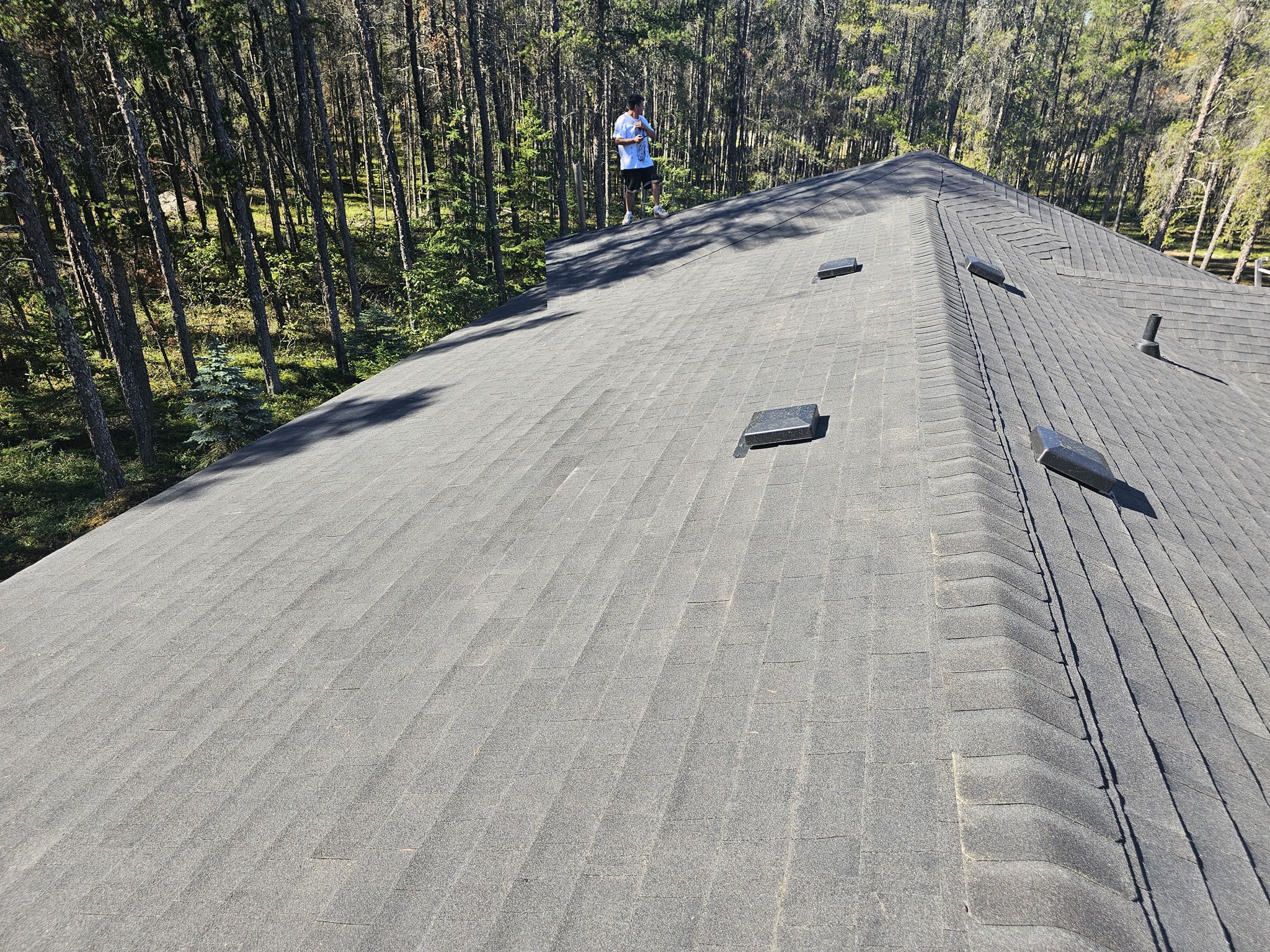
As for re-roofing, manufacturers design algae resistant shingles with granules that slowly release copper. In our climate, that effect typically demonstrates well for 7 to 10 years, then tapers. It does not repel moss in deep shade, but it delays the first streaks and makes cleaning easier. When planning a replacement, also assess flashing details around chimneys and skylights. Those are debris traps and algae nurseries when poorly designed.
The DIY versus professional call
Not every roof should be a Saturday project. Pitch, height, condition, and access dictate the risk. If your roof is two stories up with a 9 to 12 pitch, and the growth looks like a terrarium, bring in pros who specialize in soft washing. Ask them to describe their process. If they say pressure washer without qualifiers, keep shopping. Look for contractors experienced with winnipeg roofing, not just generic exterior cleaning. They should discuss runoff control, plant protection, and the chemistry they will use.
On a single story, low pitch roof with light algae streaks, a careful homeowner can succeed. Plan your hose routing, set up your ladder with stabilizers, and work in small zones. Rinse from above so you do not flood under the laps. Wear a harness even if you think you will not slip. The first time your boot tags a wet patch of algae, you will thank yourself for the tether.
What about winter work
People get itchy to fix things the moment they notice them, even in February. Leave the cleaning bucket in the shed until the thaw. Chemicals do not work well on frozen biofilms, and you will create an ice rink out of your eaves. There are two useful winter tasks. First, rake off heavy, wet snow after storms to reduce roof loading and meltwater dwell time. Second, address ice dams quickly. An ice dam that backs water under shingles saturates everything, which sets up perfect conditions for spring growth. Improve interior air sealing around attic hatches, pot lights, and bathroom fans so warm air is not pumping into the roof deck all winter.
Runoff and your yard
Bleach is effective on algae, and it is also effective at turning your peony bed into a ghost garden if you let the rinse blast land in one spot. The trick is dilution and dispersal. Pre-wet plants so the leaf tissue is less absorbent, use catchment bags on downspouts where practical, and spray a rinse that moves like a Click for more info gentle rain rather than a fire hose. Quaternary ammonium mixes are milder on landscaping, but still require care. Avoid drift on a windy day. The only time I ever saw a client truly angry on a roof job involved a brown hydrangea hedge after a gusty bleach rinse. We re-planted, I learned, and I have never rushed a rinse since.
When replacement makes more sense
Cleaning is not a magic wand. If your shingles curl at the edges, granules have thinned so much that you see exposed asphalt, or leaks have shown up in a couple of spots, it may be time to leap past cleaning to re-roofing. In that case, build prevention into the replacement. Adjust overflows, fix ventilation, choose algae resistant shingles, and consider a modest copper ridge strip. Plan tree work before the new roof goes on, not after. A fresh roof under a sappy pine canopy is like new carpet under a muddy boot rack.
Think about color too. Medium tones hide the light flecking that remains after algae dies. Very light shingles can show dirt more, very dark shingles can show salt and pollen streaks in spring. None of that matters as much as the right install, but it affects how often you feel compelled to wash.
A few neighborhood stories
On a quiet Charleswood crescent, two houses built the same year had wildly different roof aging. One sat under a stand of spruce, the other had open sky. The spruce house had moss by year seven, full green ridges by year nine. We treated it with a gentle sodium hypochlorite mix, installed copper strip under the ridgecap, trimmed branches to open a 10 foot gap, and cleaned the gutters that had an oak leaf archaeology project inside. Two years later, the roof looks respectable, and the owner now does a spring rinse and a fall brush off in an hour. The open sky house still has its original shingles at year 15 with minimal streaking. Shade and air, that is the lesson.
In River Heights, a client swore her roof leaked because of a mystery defect. The ceiling stain was real. The cause was a shaded valley packed with maple helicopters that glued themselves down each rain. Water slowed, found a nail line, and crept. After cleaning, we added a simple diverter, reworked the flashing, and cleared a quarter of the attic soffits that had been blocked since a 1990s insulation job. The algae never returned heavily. The leak never did either.
A clear path forward
Assess the type and extent of growth from the ground, then match the cure. Algae streaks are mostly cosmetic and respond quickly to a soft wash. Moss clumps demand patience, chemical kill first, then gentle loosening. Lichen is stubborn and may leave a faint ghost even after treatment, so plan for diminishing returns rather than perfection on a 15 year old roof.
The aim is not a sterile, lab clean surface. It is a dry roof that sheds water quickly and does not host sponges where shingles should breathe. With Winnipeg’s climate, prevention routines pay off more than heroics every few years. Trim what shades, ventilate what steams, keep gutters clear, manage downspouts, and make friends with a gentle cleaner. Most of all, respect gravity and friction. A roof is no place to overestimate your balance.
If you are sorting through winnipeg roofing options or just trying to decide whether to clean this weekend or call someone with a harness and a tank sprayer, use the details here as your filter. The right work, at the right time, extends shingle life and keeps your place looking cared for. The moss will always try to return. In this town, so will the snow and the geese. Give your roof a fighting chance.
Canadian Crafted Roofing And Renovations
314 Bond St, Winnipeg, MB R2C 1X5
+12042217663
https://cancrafted.ca/
Facebook